


Have you ever had conversations and thought afterward that you may have said something wrong? Ever feel drained trying to please everyone? If you do, you are definitely not alone, because many suffer from what is called fear of social judgment without even realising it.
It is our natural need to be part of something, but if we let it go too far, it can take over our choices, our mind, and even our identity. But the beauty of it is you can de-learn the habit.

In this blog, we will learn about our need for validation, how it manifests in day-to-day life, and how to pay more attention to yourself.
Table of Contents:
What are the signs you’re a people-pleaser?
How do you know if you’re overthinking social interactions?
What role does conditional affection in the past play in adult anxiety?
How do you take ownership of your emotions instead of letting others control them?

What are the signs you’re a people-pleaser?
Chronic people-pleasing behavior can be recognized by agreeing when you really want to say no, trying to avoid any conflict, saying sorry all the time, believing that other people’s emotions are your responsibility, and having problems expressing yourself.
Overcommitting: You say “yes” to too many things that you don’t have time for, just so you don’t let anyone down.
Giving up on yourself: You change your outlook based on who you are with to fit into the crowd.
Avoiding conflict: You don’t want the other person to feel bad about what you say, so you don’t say anything.
Always need approval: You feel anxious or uneasy until you have the confirmation from others that they approve of what you are doing.
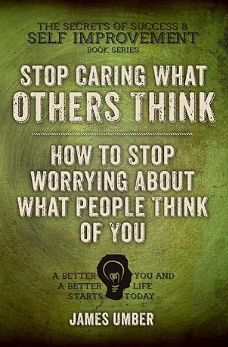
Stop Caring What Others Think
By James Umber
How do you know if you’re overthinking social interactions?
The signs of overthinking social conversations are ruminating on your conversation continuously, checking all the words that you have spoken, imagining the worst-case scenarios, getting nervous before and after having a conversation, and being unable to think of anything but the way people perceive you.
This behavior also has to do with post-event processing in that your mind keeps going over what happened hours and days later to see if there were any mistakes made and if people have been judging you.
At night, you go over every little detail and think of what you could have done differently. All this is consuming mental energy and creating excessive anxiety even when there is nothing really wrong. So you tend to avoid social interaction so you don’t get so tired afterward.
What role does conditional affection in the past play in adult anxiety?
Conditional love and acceptance in childhood make individuals believe that one has to earn his or her love by doing something well or getting approval. The consequence is adult anxiety, which is manifested in the fear of being rejected all the time.
Reasons | Explanations |
Fear of loss of love | Children know that love can be conditional and therefore, when they make mistakes, they are afraid of being rejected. |
Working for your worthiness | Children who are brought up to work for love grow into adults who think that success is needed for worthiness. |
Peacocking | The act of meeting the requirements for love becomes an infinite act of servitude. |
Distrust of love | It may be hard for adults to believe that love could exist that is not conditioned on any of their flaws. |
Fear and insecurity | Fears of whether love was unconditional or not in childhood create insecurities for the rest of their lives. |
How do you take ownership of your emotions instead of letting others control them?
Emotional self-regulation and personal responsibility refer to the realization that your emotions are yours and should not be controlled by anyone else. Rather than blaming other people for whatever is going on, just pause and think about it.
Don’t just jump to blame the other person immediately. Start with recognising when you get angry and why. Learn to pause before responding so you can decide how you want to react, instead of reacting impulsively.
It can also be helpful to keep a log of your feelings to see if there are any patterns. Remember that people say or do certain things; it is your response to their behaviour that is entirely up to you.
Source: medium.com
About The Author – George J. Ziogas
Manners will take you where money won’t | HR Consultant | OHS Specialist | Personal Trainer ziogasjgeorge@gmail.com

 ↓