
 Is has been found correlated with depressive tendencies such as low self-esteem, self-criticism or low efficacy, social anxiety, achievement pressures (from self and others) and high self-consciousness (i.e. they are overly concerned with reactions of others, and often overestimate the concern of others about themselves). Note on the side: causal relationships have not often been clarified yet (meaning, we don’t know exactly which comes first – impostorism or self-esteem issues).
 What behaviors do I mean? Well, working yourself to the point of burnout, or spending more time on sounding smart than actually investing in your own development. There are of course different ways in how fake imposters immediately cope with their syndrome. Some studies have for example shown that while women mostly take direct actions against these feelings of fraudulence, men actually reported using more avoidant coping methods such as trying to get distance from their doubts through alcohol or other substance abuse, working even harder, or just ignoring those thoughts. The two major groups of coping mechanisms are actually complete opposites: avoidance versus overworking.

We then discredit the presentation, exam, interview or project by doubting the examiner or interviewer or our supervisor and believe that they must have made a mistake, given us the benefit of the doubt because they like us, or simply didn’t have anyone else to fall back on.
But you know what’s really going on, don’t you…
This effort to control everything that happens in your life is an attempt to avoid feeling vulnerable. I know this is true for me at least, because it already makes me feel very uncomfortable writing about this just now. After all, my professors could read this and think less of me, right?
To be honest, I’m still a bit nervous and anxious before every meeting with a professor because I don’t 100% trust that what I do is good, or enough. So far I’ve received good feedback, but this feeling keeps creeping up on me. And I’m sure I’m not the only one of my classmates or friends to feel that way.
Common avoidance tactics tend to be avoiding difficult situations, struggling to be assertive, holding back, not taking risks, dreaming of escaping it all, not putting yourself forward for promotion, failing to ask for help, under preparing, procrastinating or blaming others for making you feel inadequate.
You don’t have to be using all of these tactics to be an avoider, some tendencies to opt for avoiding instead of overworking is already a sign. I’m obviously not avoiding my work, this wouldn’t be possible and for that i also simply like it too much. But I do feel the little urges inside of me to avoid – any situation that make me vulnerable and where I fear being exposed and criticized.
But these strategies ultimately lead to even worse outcomes, and you basically set yourself up for failure! If you lose control, you might end up not doing the work, missing job opportunities or aiming too low, letting others down for real, or never settling down for long, in a job, task or even place. Seeing this and understanding where these behaviors come from is a first step.
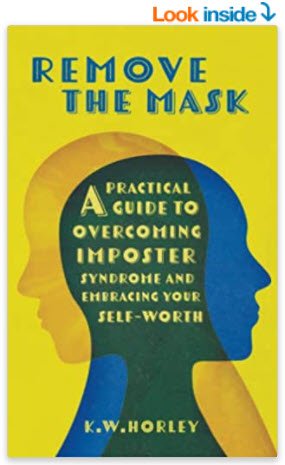
Remove The Mask A Practical Guide to
Overcoming Imposter Syndrome and
Embracing Your Self-Worth
By KW Horley
 But people with IS in these moments forget that these feelings of insecurity are normal. Instead, they believe that because they feel a bit overwhelmed at the beginning, this must mean that they are not capable of fulfilling their new role, have not earned their spot or that somehow they ended up way in over their heads in a project that was meant for someone much smarter, talented and capable.
 Don’t worry. To quote my friend and colleague Beth Anne (quoting our friend and colleague Rohin, quoting – unfortunately, not our friend – Woody Allen):

 ↓
↓